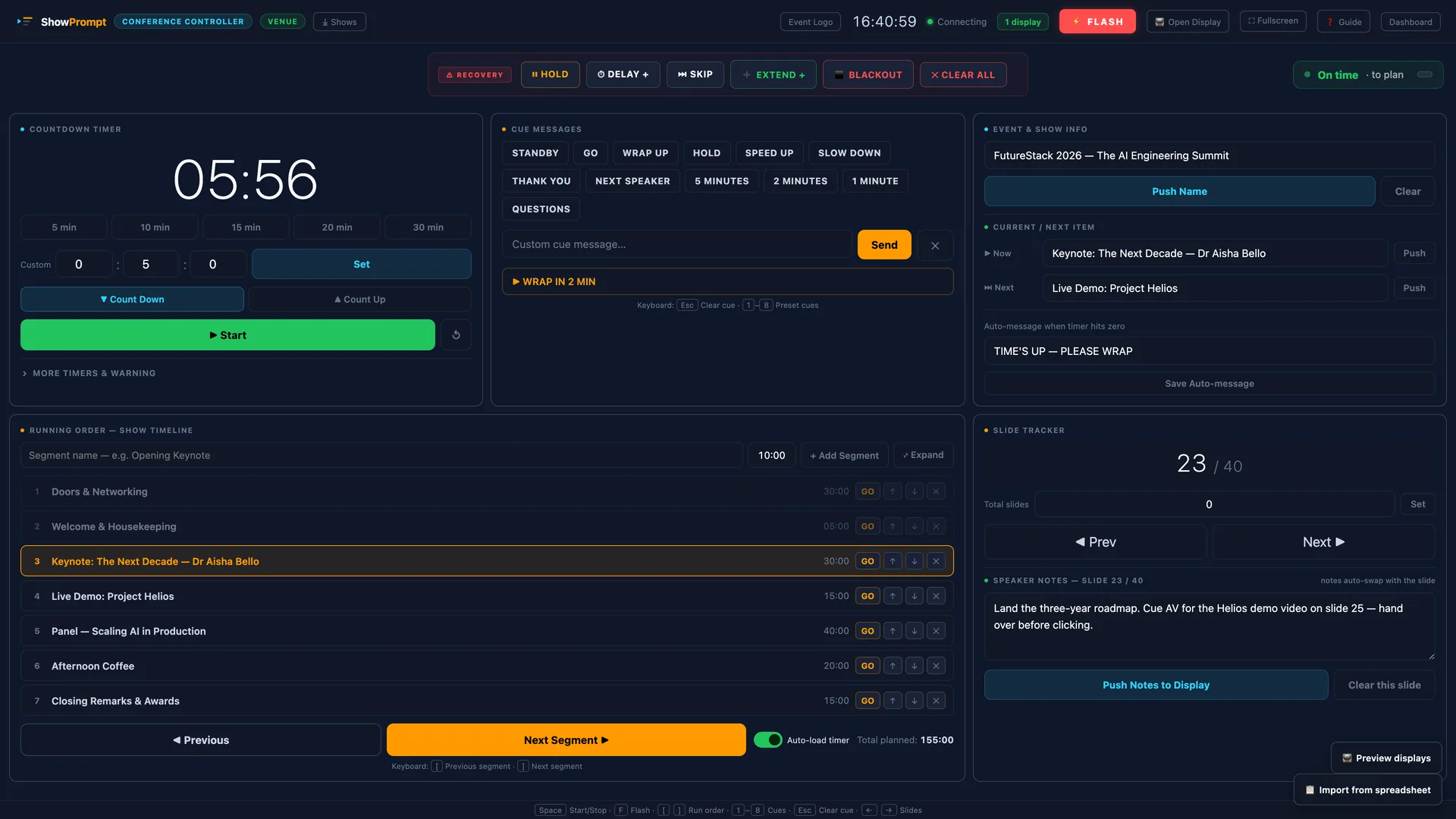
Almost every show starts life as a spreadsheet: segment names down one column, durations down another, maybe a notes column nobody reads. It's a fine planning document. The problem is what happens on the day — the spreadsheet sits on one laptop while the actual show is run from memory, sticky notes and hope.
The gap between plan and performance
A static running order can't keep up with a live show. When a segment overruns, the spreadsheet doesn't recalculate. When you skip an item, nobody downstream knows. When the operator steps away, the plan walks out of the room with them. The document that was supposed to keep everyone aligned quietly stops doing its job the moment the show starts.
Make the running order live
The fix is to turn that list into a live, shared timeline. Build the segments with their planned times once, then run the show from it: mark the current segment, and the system loads its time onto the stage timer automatically. Step to the next item and everyone's screens update together. The plan and the performance become the same thing.
One source of truth, many screens
Once the running order is live, it can drive every screen with the right slice for each person:
- The presenter sees now, next and their countdown.
- The crew see the full timeline and where you are in it.
- The operator drives it and pushes cues.
No more relaying changes by whisper — everyone reads the same source.
Plan realistic times, then watch the drift
A running order is only as good as its durations. Pad nothing and you'll overrun; pad everything and you'll finish early to an empty room. Set honest times, then let a smart timing engine show your projected finish as you go. If you're slipping, you'll see it early enough to do something about it — trim a break, drop a segment — instead of discovering it at the curtain.
Bulk-build it, don't retype it
You already wrote the running order once. A good controller lets you paste it in — one segment per line with its time — rather than re-keying every row. Five minutes of setup turns your planning spreadsheet into the engine that runs the night.
The result
A running order that's actually live changes the feel of a show: fewer surprises, calmer crew, on-time finishes, and a plan that survives contact with reality. It's the difference between having a schedule and running to one.